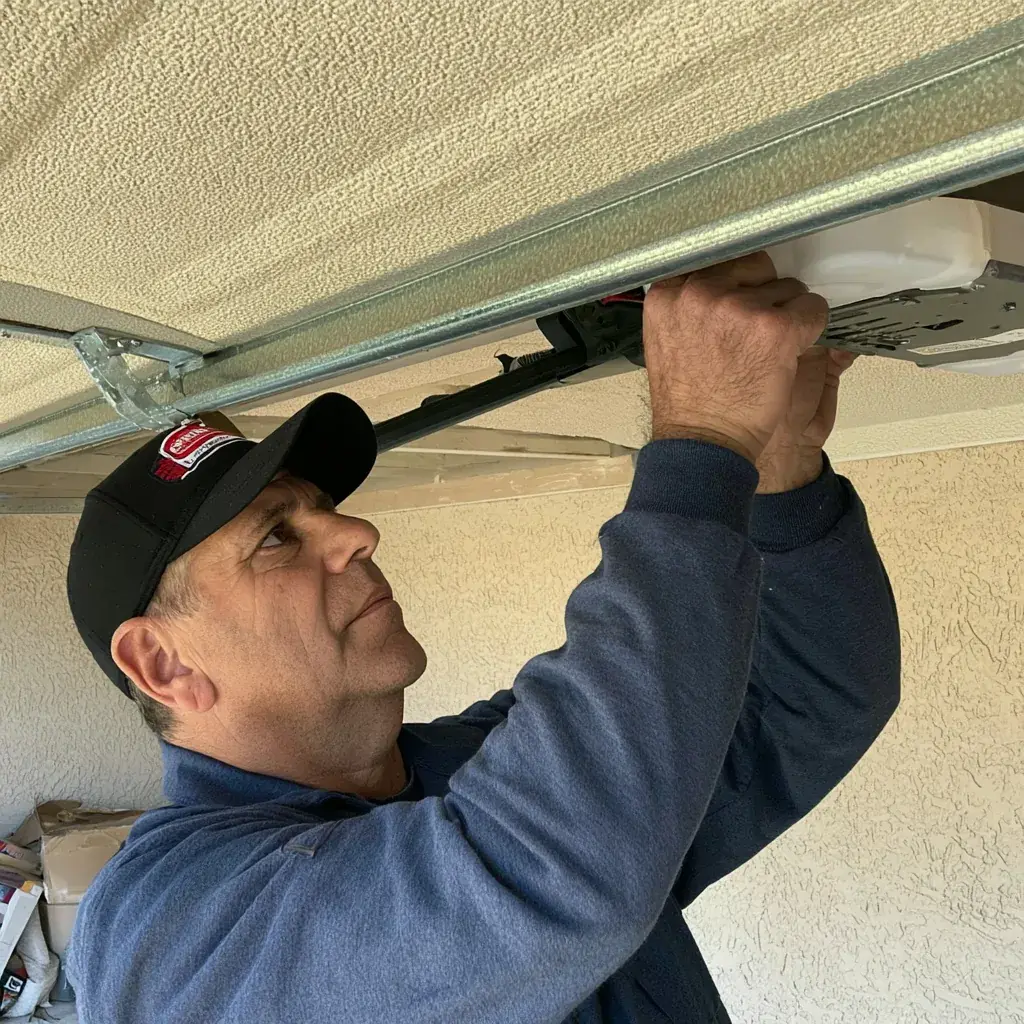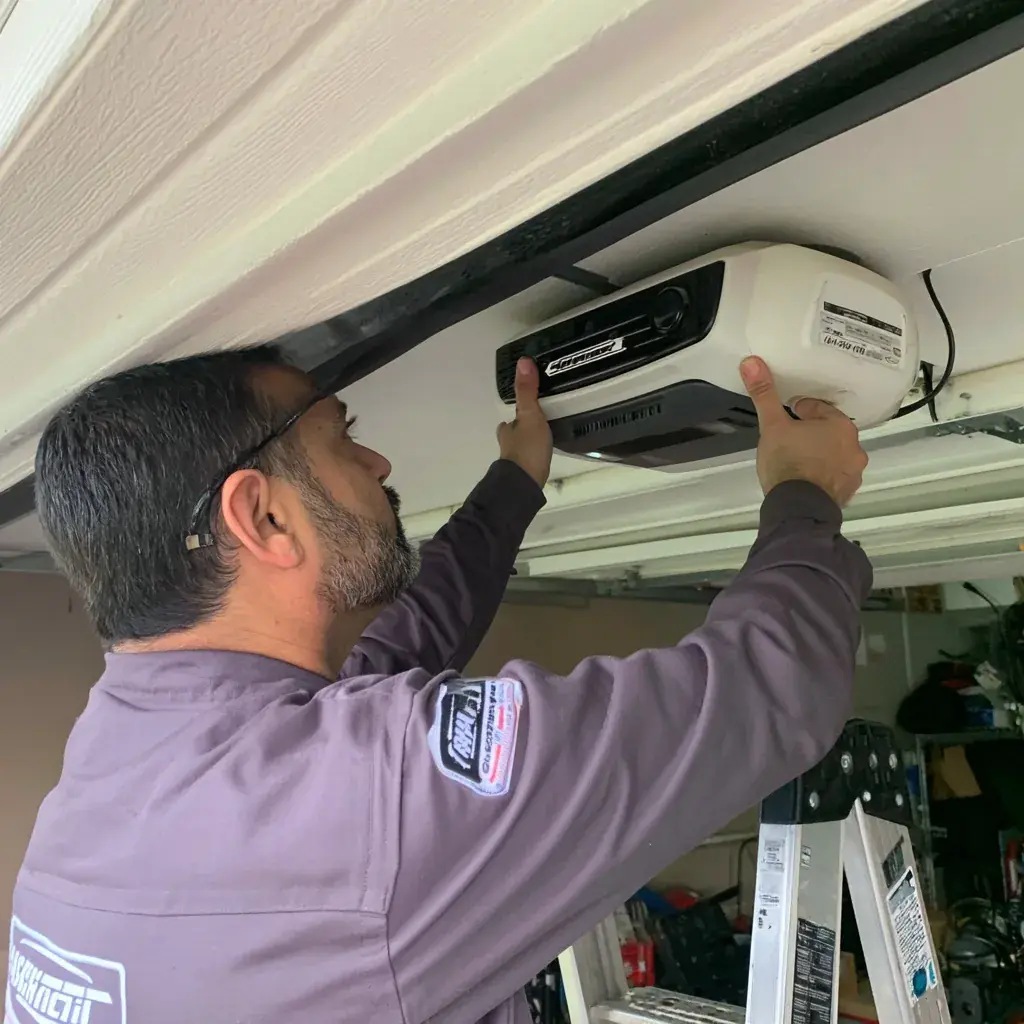
A garage door that hangs crooked, one side noticeably higher than the other, is not a cosmetic problem in Richardson homes on Canyon Creek or Buckingham. It usually means one lift cable is no longer pulling evenly with the other, and the door is being dragged up lopsided by whichever side still has tension. Left alone, the low corner keeps dropping and the tracks take the strain the cables were supposed to carry.
The Cable Doing Less Work
Each side of the door has its own lift cable running from the bottom bracket up to a cable drum near the torsion spring. If one cable stretches, frays, or slips off its drum, that side stops lifting at the same rate as the other. The door then tilts toward the weak side every time it travels, and the tilt usually gets worse with each cycle rather than staying the same.
A Slack Cable Versus a Snapped One
A slack cable still exists but has gone loose, often bunching or bulging out of its drum's groove instead of winding tightly. A snapped cable is gone entirely, and that side of the door will drop hard and fast rather than tilt gradually. Both cause the same crooked look while the door is partway open, but a snapped cable is the one that stops working today, not eventually.
What the Bottom Bracket Does
A door that sits higher on one side is rarely a design flaw. One lift cable has usually gone slack while the other stayed tight, so the bottom bracket on that side rides up unevenly as the door travels. A cable that jumped its drum, frayed, or loosened its drum-end fitting will do this in Richardson garages just as easily as anywhere else. Do not force the door or yank the slack cable straight; call for a look before the track bends or the bracket tears loose.
Slab Shift and the Door Opening
Richardson sits on expansive clay soil that swells and shrinks with moisture, and slab foundations here can settle unevenly over years. That shift can nudge a garage door opening slightly out of square, which changes how the tracks line up on each side. A door that has been crooked for a long time, without a sudden drop, is more likely tied to this kind of slow settling than to a cable failure.
Reading the Tracks Themselves
Look at the vertical tracks on each side of the opening while the door is closed. If one track has pulled away from its mounting or bowed outward, the rollers on that side ride differently than the rollers on the other, and the door will sit crooked even with both cables intact. This is common in older attached garages around Richardson Heights that have never had the track hardware re-tightened.
Sudden Drop Versus Slow Lean
A door that suddenly drops an inch or more on one corner during a lift, especially with a loud sound, usually means a cable just failed or slipped off a drum under load. A door that has leaned a little more each week points somewhere slower, like a loosening bracket or a track working itself out of alignment. The speed of the change says more than the amount of tilt does.
Why the Spring Side Matters
The torsion spring above the door does the heavy lifting, but the cables and drums translate that lift into even motion on both sides. If a drum has slipped along the shaft, even slightly, the cable winding onto it travels a different distance than the one on the other drum. That mismatch shows up as a door that opens crooked from the very first inch of travel, not just near the top.
Where Homes Near Duck Creek Differ
Attached garages closer to the Duck Creek drainage area can see slightly more moisture cycling through the slab underneath them after heavy storms, which adds to the settling that already happens across Richardson. That doesn't change the mechanics of a crooked door, but it means a homeowner in that area checking a lean should still look at cables and brackets first, not assume the foundation is automatically the cause.
What Not to Force
A door that is visibly crooked should not be run through a full open-close cycle to see if it clears up on its own. Forcing a lopsided door up or down puts uneven load on whichever cable or bracket is already compromised, and that is how a slack cable finishes the job and snaps. If the door is partway open and crooked, leave it there rather than reaching for the opener again.
When Watching It Is Enough
A very slight, longstanding lean that hasn't changed in months, and that doesn't come with any new sound or sudden drop, can often be watched rather than treated as urgent. This is more likely the slow slab-shift kind of crooked than a cable problem. Keep an eye on whether the tilt is getting worse or whether either bottom corner has started drooping further than before.
When It Needs a Same-Day Look
A door that has dropped suddenly on one side, or one where a cable is visibly frayed, bunched, or hanging loose off its drum, needs attention the same day. That door is under uneven tension and can shift further or come free without warning. The licensed pros we connect you with can tell a stretched cable from a bent bracket or a settling foundation before anyone tries to move the door again.
Dealing with this in your home?
Slab foundations near Cottonwood Heights and Prairie Creek shift as clay expands after rain, then contracts in triple-digit heat. That movement racks the frame around the garage opening, so tracks bind and rollers wear unevenly. The posts below cover what pulls a door out of true, what a fix costs, and when a panel job beats a full replacement.