Parts Explained
Garage Door Parts Explained for Richardson, TX
What each part on the door actually does, how it fails, which ones are safe to touch, and what it costs to put right.
The Plain Truth
A garage door uses springs, cables, rollers, tracks, panels, and an opener as one system. A symptom in one place can come from a different loaded or moving part, so the safe first step is to keep a crooked, unusually heavy, or unsupported door still and ask for a diagnosis and written scope.
The pages below take one part each. What it is for, what it sounds and looks like when it is going, what it takes with it if it is left, and the estimated cost of putting it right in Richardson. Estimated ranges for every job are on the pricing guide.
Part by Part
Every Part on the Door
Questions & Answers
Frequently Asked Questions
Which garage door parts should I never touch?
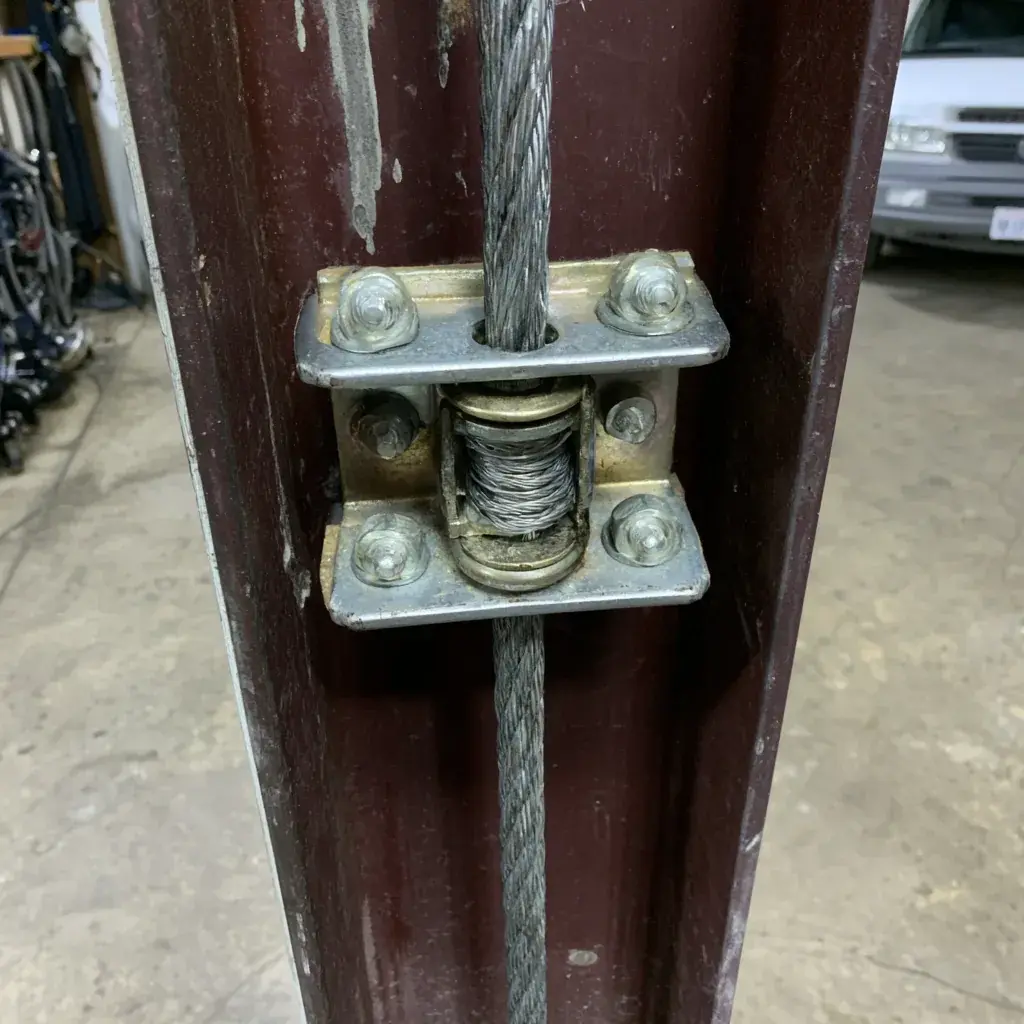
Leave anything holding the door's weight to the licensed pros we connect you with: torsion and extension springs, the lift cables, the cable drums, and the bottom brackets. These parts store enough force to snap back hard and cause serious injury in a Richardson garage. Each has its own page with more detail on how it fails and what replacing it involves. If a spring looks stretched or a cable looks frayed, stop and call rather than testing it yourself.
How do I know which garage door part failed?
A grinding or popping sound tells you something is wrong, but not which part in Richardson homes with slab foundations and shifting clay soil, several parts can strain at once. A loud noise might point to rollers, a bent track, or a stressed spring, and only a closer look confirms it. Check the individual part pages here for the specific signs each one shows before assuming you know the cause.
Can I replace just one garage door part?
Often yes. Rollers, hinges, and weatherstripping are usually independent repairs, and the pros we connect you with in Richardson can swap just the failed piece. Springs and cables are different, since they work as a matched pair and one worn side puts extra load on the other. The part pages linked from this hub note where single-part replacement is realistic and where the whole set needs attention together.
How long do garage door parts usually last?
It varies by part and by how much the door near Cottonwood Creek or Floyd Branch sees moisture and temperature swings through a Richardson summer and winter. Rollers and hinges wear from daily cycles, while springs fatigue from tension over years. Heat near U.S. Route 75 and freezing nights each add their own stress. Each part page gives a more specific lifespan range so you can judge where your door's parts stand.
Get Started Today
Not sure which part has gone?
Call and describe what the door is doing. Confirm the inspection charge, availability, timing, visit charges, the written scope, and warranty terms directly with the licensed pros we connect you with.
Call (214) 702-5291