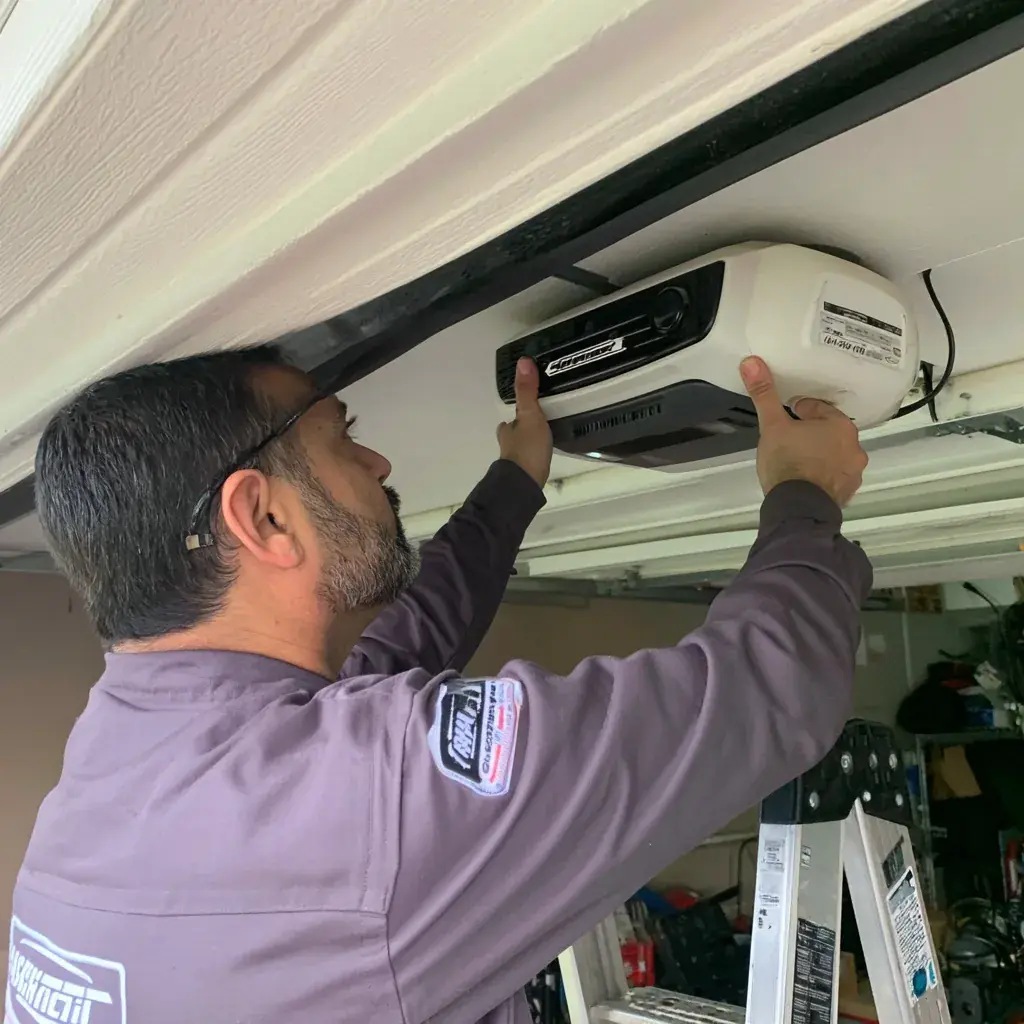
Faults
Crooked, One Side Higher
A Richardson garage door sitting crooked, higher on one side than the other, almost always points to a broken or slack cable, not the opener. Here's how to tell which side and how urgent it is.
Read article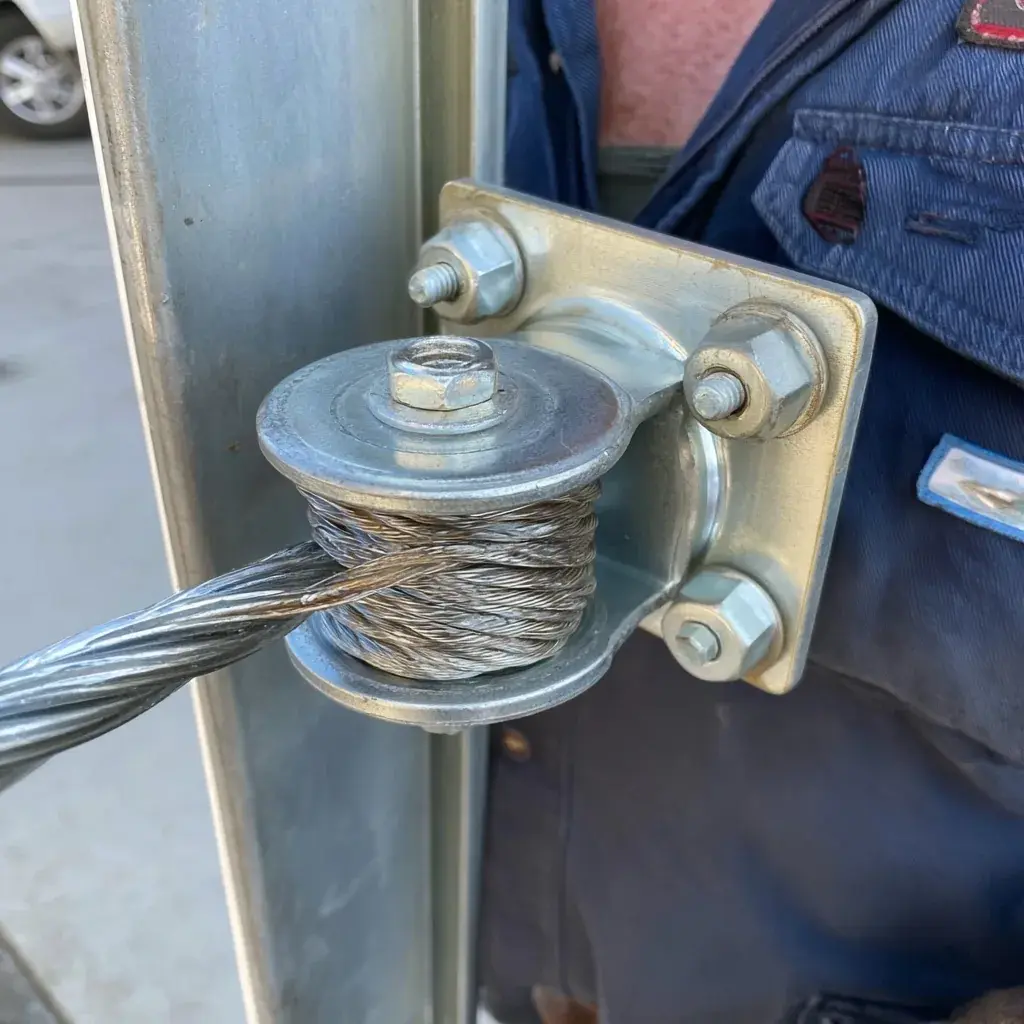
The right drive and horsepower for your Richardson garage.
Garages around Canyon Creek and Richardson Heights still run whatever opener the builder installed decades back, often a chain-drive unit with no auto-reverse test ever performed. Homes near Duck Creek and Northrich show the same pattern: a worn opener kept running past its safe life because it still lifts the door most days.
A pro starts by weighing the door itself, not guessing horsepower off a chart, since a heavier insulated door built for North Texas heat needs more lift than a light single-layer panel. Rail length gets measured against the ceiling next, because older Richardson garages built before jackshaft drives were common often lack the clearance a standard rail wants, and that decides whether the job stays simple or needs a different drive entirely.
Across Dallas County, whether you're in The Reservation, Duck Creek, Northrich, or elsewhere around Richardson, garage door opener installation is worth arranging with somebody who works on this housing stock rather than a generic plan. Foundation type, soil and building age all change what has to happen first.
This is most often a home job — residential garage door repair sets out what that involves, or see commercial garage door repair if the property is a business or a rental.
A homeowner who bought a new door in Richardson often finds it comes without a working opener, or with one that was pulled off an old track that no longer fits. That gap between a new door and an installed opener is where this job starts. Anyone opening a garage by hand every morning on Campbell Road or Belt Line Road, or running an opener that predates the door it now lifts, needs a unit sized and wired for the door actually hanging there, not the one it replaced.
A new opener installed without matching horsepower to the door's real weight strains the drive from day one. A heavy insulated door near Canyon Creek needs more lifting power than a light single door off Spring Valley Road. Guessing at horsepower instead of weighing the door against the manufacturer's chart means the motor works harder every cycle, wearing gears down long before a properly matched unit would show any strain.
Every opener sold for home use since 1993 needs two photo-eye sensors near the floor and an auto-reverse function that stops the door if it meets resistance. During installation in a Richardson garage, the sensors get aligned so their lights hold steady, not blinking, and the reversal force gets tested until the door backs off cleanly instead of pressing on. Skipping this step is not a shortcut worth taking with kids or a parked car underneath. A unit already installed with a failing sensor belongs on the opener repair page, not this one.
A call covers the door's size and weight, whether it's insulated, and roughly how much headroom the garage ceiling has above the track, since that decides which drive type and rail configuration fit.
The licensed pros we connect you with check the ceiling clearance, the door's actual weight and material, and any wiring already run to the garage before recommending chain, belt, or jackshaft.
Safety sensors get mounted low on each side of the track, wired in, and aimed until the indicator lights show a clean beam with nothing blocking it. The door gets tested against the beam before the rail is called finished, since a sensor that's present but misaligned won't stop the door.
The opener runs through several full cycles while the pros watch travel limits, force settings, and how the door responds when the beam is broken partway through a close. Adjustments get made on the spot until the unit stops and reverses the way it should every time.
Richardson's older subdivisions and its newer, larger homes near Sherrill Park were not built to one opener spec. A garage from before openers were standard often lacks the headroom a modern rail assumes, while a heavier insulated door on newer construction needs more lifting power than an older opener ever had to supply. Matching the unit to the actual door and the actual ceiling is the job, not an afterthought to it.
Richardson Heights and other early Richardson subdivisions built before openers were standard often have garages with less headroom above the door than current opener rails expect. A standard extension rail needs clearance that a low ceiling or an exposed joist near the door track does not leave. Low-headroom rail kits or a jackshaft unit mounted beside the door solve this without cutting into the ceiling framing.
Newer construction toward Sherrill Park and other larger-footprint additions tends to arrive with standard headroom and a door already sized for a full-power belt or chain unit. The install there is closer to a straight swap: mount the rail, wire the unit, set the travel limits. Older garages nearer Downtown Richardson or Buckingham are more likely to need a headroom workaround before the opener itself goes in.
These guide figures for garage door opener installation vary with the door, the failed part, and the work found to be necessary.
| Where It Shows Up | Common Build Era | Worth Checking Too |
|---|---|---|
| A garage door track gets set level at installation, then whatever is underneath it keeps moving in small ways for years afterward. Framing settles, slabs shift, and a track that was true on day one can end up out of square without anyone touching it. | Photo-eye realignment, cable inspection, opener force test, full lubrication | an estimated $320–$945 |
| Lubricant that moves smoothly on a warm afternoon can thicken by evening once the temperature drops, dragging a roller just enough that the opener pulls harder to finish the same lift. The strain shows up in the motor's effort long before it shows up as noise. | Cracked spring removal, safety cable install, tension bar reset | an estimated $380–$1350 |
| Plastic gears inside an opener wear down for a reason, not by chance. Tracks pulling out of line or rollers dragging force the motor to push harder on every cycle, and that extra load is usually what grinds the teeth away long before the opener itself is old. | Flood-prone bay bottom seal swap, threshold gap sealed against runoff | an estimated $570–$2160 |
| A spring already worn thin before a stretch of heavy use tends to fail suddenly at the next hard cycle rather than fading out gradually, since fatigued steel behaves differently under load than steel that still has its full strength. | New door, smart opener install, sensor wiring for slab-set garages | an estimated $910–$3595 |
Price comes down to which part failed and how much strain it was already under. A worn cable that gives out on a door still moving evenly is a smaller fix than one part dragging against a frame that has shifted out of true, so a tech has to see it move before pricing it.
Chain drives cost less and handle a heavier door well but transmit more vibration into an attached garage wall. Belt drives run quieter, which matters if a bedroom sits next to the garage in many Richardson floor plans. Jackshaft units mount on the wall beside the door instead of overhead, which solves a low-headroom garage but usually costs more than either rail-mounted option.
Horsepower depends on the door's weight and material, not the garage size. A single steel door in a Richardson Heights or Canyon Creek home usually runs lighter than an insulated double door common in newer construction near Sherrill Park. The licensed pros we connect you with weigh this against the door before recommending a unit, since undersized motors strain and wear out early.
Jackshaft openers mount beside the door on the wall, not on a ceiling rail, so low headroom above the track in an older Richardson garage stops being a problem. Some belt and chain units also come in low-headroom rail kits. Which one fits depends on the actual clearance measured in your garage, not a guess from the door's age or style.
Yes. Every opener sold in the United States since 1993 has to include photoelectric safety sensors near the floor that stop and reverse the door if the beam is broken, along with auto-reverse if the door meets resistance closing. A new installation in Richardson includes both, wired and tested as part of the job, not sold as an add-on.
Not directly. A new opener installation is about matching the unit to the door already hanging there, not about a failure in an old one. It becomes relevant if that old opener failed because of a worn part covered by garage-door-opener-repair, or if the door itself needs work first, which falls under a different page for that specific problem.
Chain drive is the cheapest and loudest, fine for a detached garage away from the house. Belt drive runs quieter, which matters more in Richardson Heights or Buckingham where the garage sits under a bedroom. Jackshaft units mount to the wall beside the door and free up ceiling space, useful in a Heights Park garage with a low rail or stored bikes overhead. The right pick depends on noise tolerance and headroom, not price alone.
The estimated guide range for garage door opener installation in Richardson is $379–$899 for this work. The licensed pros we connect you with must confirm the actual scope and charges directly.
Homeowners often wait through one full winter of a stiff, slow-closing door before calling anyone. By spring the spring itself has usually cracked, not just stiffened. What felt like a cold-weather quirk in January is frequently the reason the door will not lift at all by April.
A Richardson garage door sitting crooked, higher on one side than the other, almost always points to a broken or slack cable, not the opener. Here's how to tell which side and how urgent it is.
Read article
A grinding garage door usually means worn rollers, a misaligned track, or opener gear wear. Here's how to tell which one is happening in your Richardson garage.
Read article
A Richardson garage door that lifts a few inches then stops usually traces to blocked sensors, a drifted limit setting, or spring tension loss, not a dead opener.
Read articleClay soil under Richardson slabs shifts with every wet spring and dry August, and that movement is what nudges a garage door track out of true. Homes near Cottonwood Heights and Arapaho Heights sit on the same slab-on-grade pattern common across the city, so binding at one bottom corner shows up again a few years later on the other side. A licensed pro can true up the track without replacing hardware that still has life left. Get a fixed price before anything comes apart.
Call (214) 702-5291