Commercial Roll-Up Doors
Coiling Doors
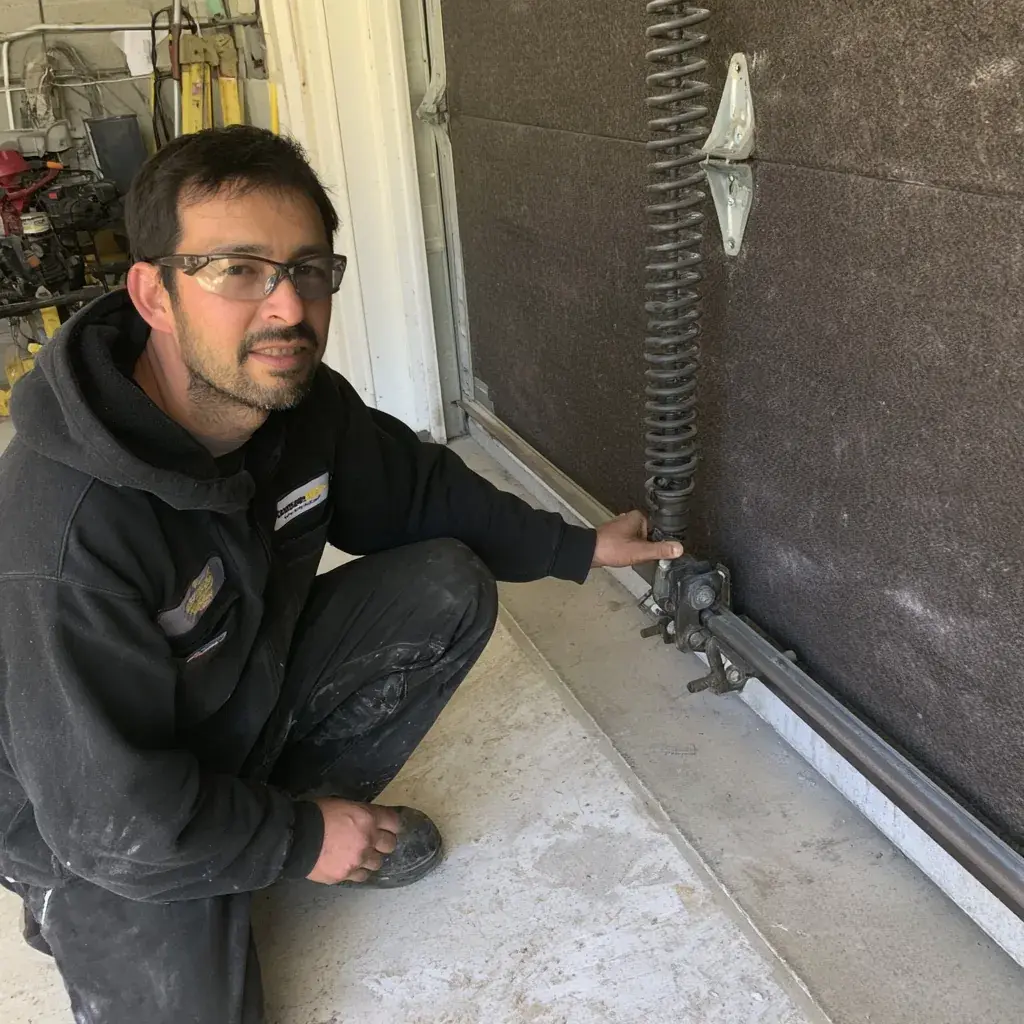
New commercial door installation for Richardson bays, matched to opening and duty cycle.
Commercial door installation fits a new sectional, roll-up, or high-speed door to a measured opening, matched to the bay's daily cycle count. It covers headroom and side room checks, spring cycle-life specification, operator selection, and controls suited to how the bay works.
A new sectional door for a Richardson commercial bay starts with the opening, not the door. Measuring width and height only gets you halfway. Headroom above the opening has to clear the track curve and the operator, and side room needs enough clearance for the tracks and counterbalance hardware. On an older Telecom Corridor building or a retrofit near Central Expressway, headroom is often the number that rules out a standard sectional and pushes the job toward low-headroom track or a different door type entirely.
Sectional, roll-up and high-speed doors solve different problems, and the choice should follow how the bay gets used, not which door looks most familiar. A loading dock off Central Expressway that cycles dozens of times a shift wants different hardware than a warehouse bay near Renner Road that opens twice a day for deliveries. High-speed fabric doors exist for climate separation and heavy daily traffic; roll-up steel curtains suit dock and warehouse security; sectional doors still fit most single-bay commercial fronts in Richardson.
Spring cycle life is the number that should match the bay's actual use, not the door's price point. A door rated for light use that gets run 40 times a day will wear out its counterbalance long before a door specified for that duty cycle from the start. A facilities manager weighing a quote for a Richardson property should ask what cycle count the springs are rated for, not just what the springs cost, since replacing an undersized spring mid-lease is a harder conversation than specifying it correctly once.
Commercial door installation starts with the opening, not the catalog. A facilities manager measuring a bay for a new commercial door in Richardson needs headroom above the opening, side room on each jamb, and backroom behind it, since sectional, roll-up, and high-speed doors each claim that space differently. A dock bay near Central Expressway with low headroom may only fit a low-headroom track package, while a wider bay off Campbell Road might take a standard sectional. Getting this wrong before ordering means a door that cannot be installed as specified, not just one that fits poorly.
Commercial controls go well beyond a single wall button. A push-to-close bay near a loading area typically needs edge sensors, a keyed disconnect for lockout during maintenance, and often an interlock tied to the building's access system. Richardson properties near the Telecom Corridor with tenant turnover benefit from controls that can be reprogrammed without replacing hardware. Specifying controls at installation, rather than adding them piecemeal later, keeps the door usable by whoever occupies the space next.
| Bay Use | Best Fit | Why It Fits |
|---|---|---|
| Low headroom bay | Sectional needs less overhead clearance | Low-headroom sectional track |
| Narrow side room | Roll-up needs less side clearance | Roll-up curtain and barrel |
| High-frequency dock bay | Sectional cycle life falls short | High-speed fabric or roll-up door |
| Occasional-use bay | Standard duty operator sufficient | Sectional with light-duty operator |
| Insulated cold-storage bay | Sectional seals tighter panel to panel | Insulated sectional panel door |
| Low headroom, frequent forklift traffic | Low-headroom sectional track | Clears tight ceiling, still full panel strength |
| Loading dock, occasional truck access | Standard roll-up curtain | Compact coil, low parts count to maintain |
| Warehouse bay cycling dozens of times daily | High-speed fabric or steel door | Built for rapid open-close without early failure |
North Texas heat is the daily load a new commercial door has to handle from day one in Richardson. Triple-digit summer afternoons expand steel panels and track hardware, and a door installed with tight tolerances in cooler weather can bind once August arrives. Installers sizing a new door for a Richardson bay near Arapaho Heights or Southwest Richardson account for that seasonal swing in how the track and panel gaps are set, not just how the door looks the day it goes in.
Clay soil shift is the other factor a new installation has to plan around, and it has nothing to do with weather. Most commercial buildings in Richardson sit on slab foundations poured over expansive Blackland Prairie clay, and that clay swells and shrinks with moisture across the year. A slab that moves even slightly can push an opening out of square within a few years of a door going in, so a properly fitted door allows a little more tolerance than a perfectly square opening might suggest.
Spring hailstorms and the occasional tornado risk, including the 2019 tornado that caused documented damage inside Richardson, are a real reason some commercial doors get replaced outright rather than repaired. A new installation after storm damage is a chance to specify a heavier gauge panel or a higher wind-load rating than what failed, especially for a bay facing open exposure near Spring Creek Nature Area or along a wide commercial frontage on Coit Road.
A new door going into a building near the University of Texas at Dallas or a retail bay along Belt Line Road is a different scope than a new door on a house. The opening has to be measured against the building's actual use, not a catalog size, and the quote should reflect that the bay might run multiple shifts a day rather than sit closed most of the time. Downtime during installation matters more here too, since a blocked bay can stop deliveries or close a loading dock for a business day.
A written quote for a commercial installation in Richardson should itemize more than a lump sum. That means the door type and gauge, the spring size and its rated cycle life, the operator model and its horsepower or duty rating, and the controls included. A facilities manager overseeing a property near Galatyn Park or a business off Campbell Road benefits from a quote that names each of these separately, since it becomes the record referenced later for warranty claims or insurance documentation.
Fitting a new commercial door is a different job from repairing one, even though both involve the same opening. A new installation means resizing or rebuilding the frame if the opening has shifted, setting fresh track and headroom clearances, and commissioning an operator and controls from scratch. Repair work, by contrast, usually restores an existing setup to its original spec. Richardson properties near Buckingham or Downtown Richardson sometimes need a new door specifically because the existing frame no longer holds a square opening.
Texas has no state license for garage door installers, and Richardson adds no separate credential for commercial door installation specifically. What the city does require is contractor registration with Building Inspection before permit work begins. For a commercial door installation job, ask whether that registration is current and whether the installer plans to pull a permit for the opening, not for a license number that Texas simply does not issue for this trade.
A new commercial door installation is worth documenting the same way a repair record would be, but the paperwork starts earlier. The scope of work should name the opening dimensions as measured, the headroom and side room clearances used, the spring cycle rating specified, and the operator model installed. For a property near Richland College or a business park off Renner Road, that record becomes what a future repair call or insurance claim references, rather than a memory of what was supposed to go in.
Permits are the other piece worth asking about before work starts, not after. Richardson's Building Inspection Department requires permits for alterations affecting a structure, including electrical and mechanical work, and a new commercial door installation touches both when an operator gets wired in. Whether a specific door replacement needs its own permit depends on the scope of the job, so it is worth a direct call to the city's Building Inspection line before the installation date is set.
A facilities manager weighing a new door for a Richardson building has to think past the purchase price. Central Expressway traffic and tenant schedules mean a bay out of service costs more than the install itself. Getting headroom, spring cycle life and control type right the first time, and getting that written into the quote, avoids a second visit and a second gap in the loading schedule near Telecom Corridor employers.
A garage door opener works harder during long stretches of triple-digit heat, since the motor and drive belt both run hotter than they were rated for on a mild day. Summer is when a marginal opener finally stops rather than just struggling.Canyon Creek, Richardson Heights and Heights Park. Hail strikes the top panel first and often leaves a dent nobody checks until the door is already struggling to seal. A dented panel can still throw a track out of true, since the metal no longer holds its original curve under the same roller pressure it always carried.
Slab foundations move with clay soil that expands and contracts through wet and dry stretches. That steady shift can tilt a frame just enough for rollers to bind or a door to drag partway through its cycle, even when every part underneath still works.Pricing here assumes a single attached garage on a slab foundation, the common setup off streets like Campbell Road and Arapaho Road. A detached garage behind an older Richardson Heights lot, or a second bay sized for extra equipment near Telecom Corridor offices, usually needs its own on-site look before a number holds. Full guide bands are on the pricing guide, and the commercial overview covers how a scheduled program works.
Coiling Doors
Overhead Sectional Doors
Facilities Managers
Watch the panels or curtain travel the full height without hesitation, check that the opener stops and reverses cleanly on contact, and confirm the remote, wall station and any photo-eye sensors respond right away. Ask for the cycle count on record and the spring size fitted, so whoever manages the Richardson building next has a real starting point instead of a guess.
Sectional doors move as rigid panels riding a vertical then horizontal track, so headroom and side room drive the choice. Roll-up doors coil a slatted curtain onto an overhead barrel and need less side room but more room above the opening. High-speed doors trade both for a fabric or rigid curtain built to open and close many times an hour without wearing out a standard operator.
A quote should list the opening's measured width, height, headroom and side room, the door type and gauge, the spring's rated cycle life, the operator's horsepower and duty rating, and the controls included, such as a wall station, radio control or photo-eye. Installation labor and any structural bracing needed for the opening should be itemized separately from the door and operator.
Match the spring to actual use rather than a season on the calendar. A distribution bay near Central Expressway lifting its door forty or more times daily needs hardware rated for that pace, while a Richardson church hall door opening twice a day can run standard-cycle parts far longer before replacement.
Call now with the opening's width, height, and how many times the bay cycles daily to start a quote.
Call (214) 702-5291